
Soccer Speed and Agility Training for Kids in Dallas: S.A.S.S.
Soccer Speed and Agility Training for Kids in Dallas: S.A.S.S.
Picture a Saturday morning on the sideline. Coffee in one hand, folding chair sinking a little into the grass. The ball pops loose, and your player sees it. You can tell they see it. But somebody else gets there a half-step sooner.

Or maybe it’s the second half. The legs that were flying at kickoff are heavier now. The runs come a beat late. You cheer anyway, and on the drive home you quietly wonder what would help.
You also know the honest truth about team practice. Coaches have a whole roster to manage and a game coming up this weekend. There’s shape to work on, set pieces to walk through, a lineup to figure out. That’s the job, and good coaches do it well. It just doesn’t leave much room for the focused work that helps one player get quicker, stronger and sharper on the ball.
That gap is exactly why S.A.S.S. exists.
What team practice rarely has time for
S.A.S.S. stands for Speed, Agility, Strength & Skills. It’s designed to complement club and school soccer, not compete with it. Your player keeps their team. S.A.S.S. adds the individual development that team practice rarely has time for.
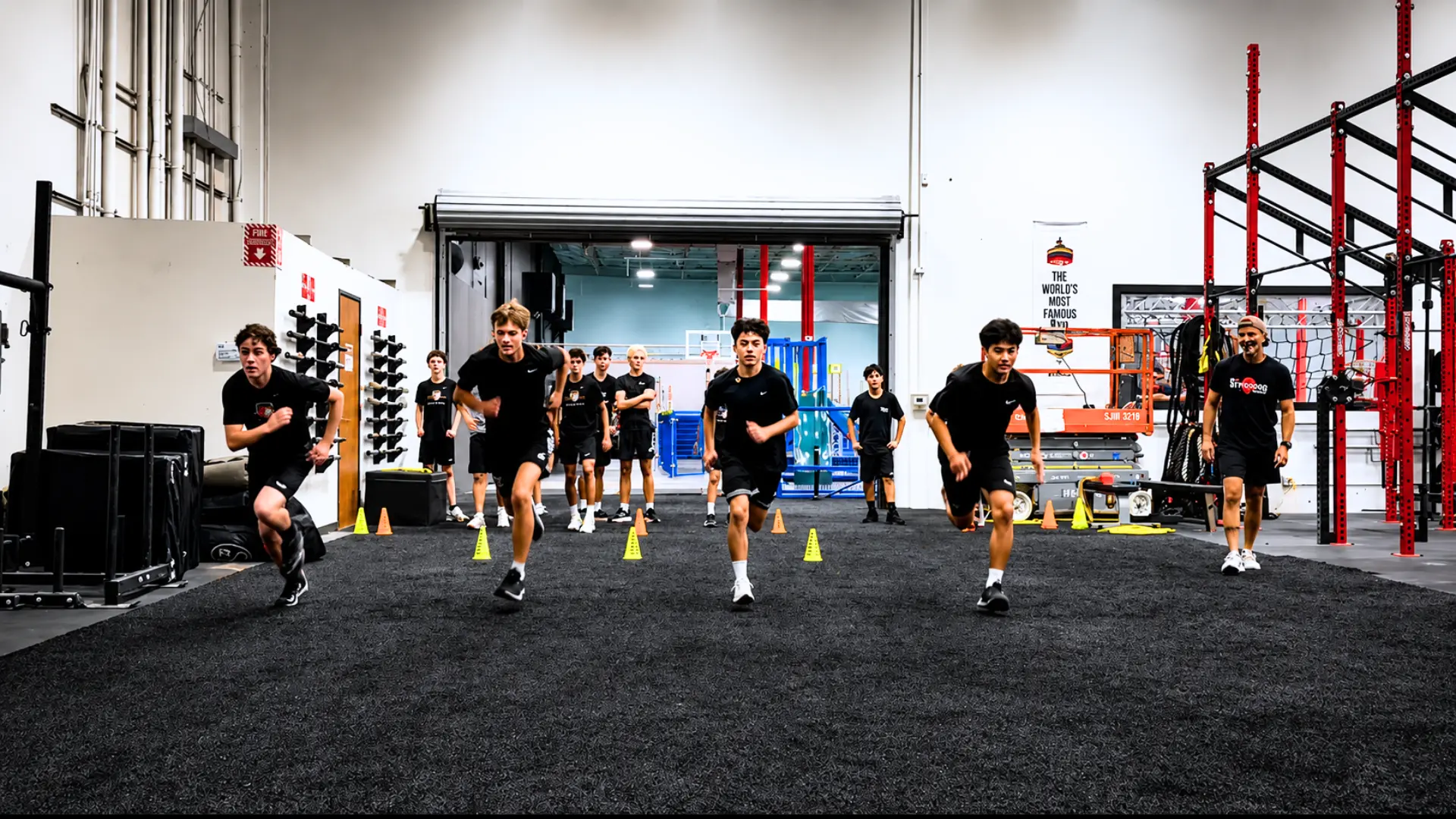
Every session has two parts. One hour is performance training, and the other hour is soccer skills. Across the session, the focus includes acceleration and first-step quickness, footwork and change of direction, and strength and power. Same night, same building, one drive.
We love this pairing because the two halves feed each other. A quicker first step matters more when the first touch is clean. A clean first touch matters more when you can actually get to the ball.
What your player actually works on
The focus areas are specific. They’re also the things parents tend to notice from the sideline:
- Acceleration and first-step quickness: winning the race to the loose ball.
- Footwork and change of direction: cutting, turning and staying balanced.
- Strength and power.
- First touch: settling the ball so the next move is ready.
- Decision-making: seeing the play and choosing well under pressure.
- Injury-resilient landing and deceleration: stopping, planting and landing well.
That last one deserves a word. So much of soccer is stopping, planting and turning, over and over. Teaching young athletes how to land and slow down with good patterns is quiet work, and it’s some of the work we care about most.
The progressions are age-appropriate, too. Players ages 8–12 and 13–17 train separately, on different progressions.
Small groups, real coaches, real feedback
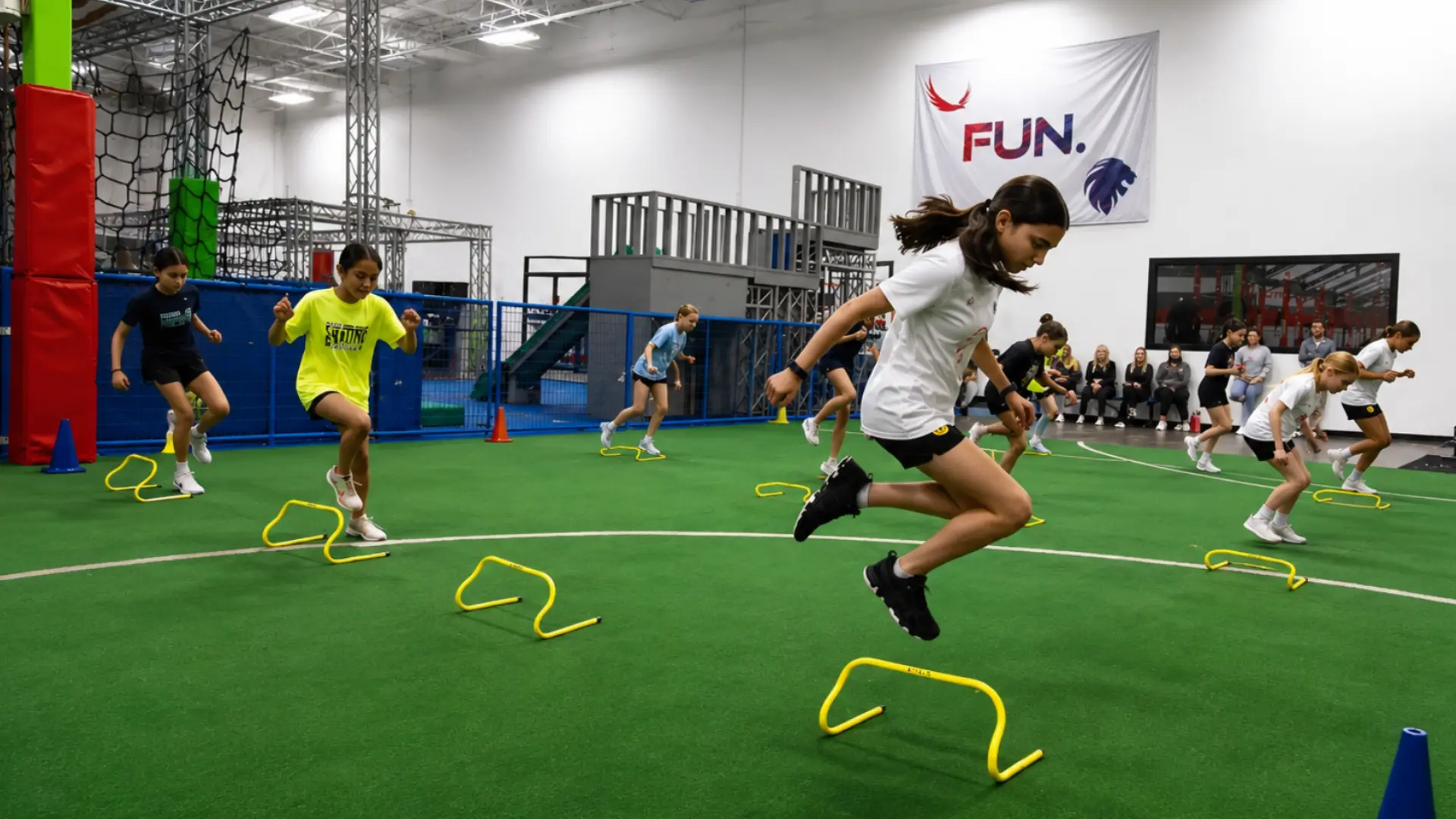
S.A.S.S. is small-group coaching, with individual feedback every session. Your player isn’t a face at the end of a long line of cones. A coach is watching how they move, telling them what they did well and showing them what to adjust next.
The soccer sessions are led by two coaches we’re genuinely proud to have on our floor. Coach Tom Bailey leads Tuesdays, and he’s a current ECNL girls head coach. Coach Kevin Salazar leads Fridays, and he’s a Dallas Cup and Norway Cup champion coach.
All levels are welcome, and groups are organized by age and ability. Whether your player is brand new to club soccer or has been at it for years, they’ll train alongside athletes at a similar stage.
Why parents like it
We won’t promise you a starting spot. Nobody honest can. What we can tell you is where the time goes: into the individual pieces of the game that a busy team practice has to skip.
S.A.S.S. meets Tuesday and Friday nights from 6:00 to 8:00 PM. You can drop in for one session at a time. Or you can sign up for four weeks at a time.
Most of all, we care about the kid as much as the player. Our hope every session is that your athlete leaves feeling seen, coached and encouraged, and heads into the weekend a little more ready.
Parent questions
What is S.A.S.S.?
S.A.S.S. stands for Speed, Agility, Strength & Skills. Every session combines one hour of performance training with one hour of soccer skills.
What ages is it for?
Ages 8–12 and 13–17, which train separately on different progressions. All levels are welcome.
When does it meet, and how much does it cost?
Tuesday and Friday nights, 6:00–8:00 PM. A drop-in session is $80. Four weeks (4 sessions) is $220.
Does it replace team practice?
No. It's designed to complement club and school soccer. It focuses on the individual development team practice rarely has time for.
Who are the coaches?
Coach Tom Bailey leads Tuesday soccer sessions and is a current ECNL girls head coach. Coach Kevin Salazar leads Fridays and is a Dallas Cup and Norway Cup champion coach.